 Sólheimajökull Glacier Hike
Sólheimajökull Ice Cave: When There Is One, and When There Is Not
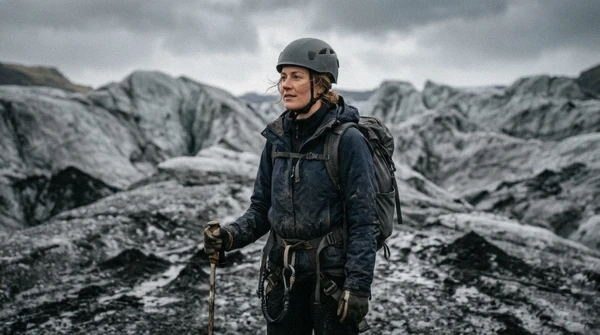
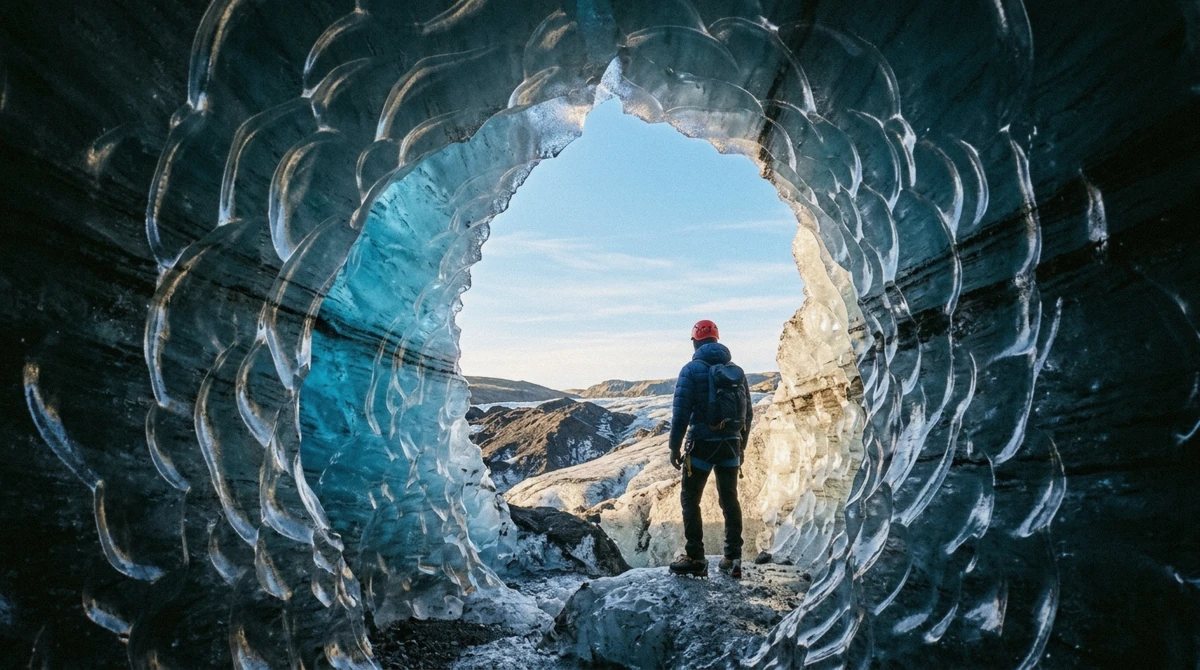
A search for solheimajokull ice cave usually arrives with one specific hope: book a hike, walk inside blue ice, leave with the photo. The honest answer is that a natural cave forms here most winters, roughly November through March, carved by summer meltwater and only safe to enter once the cold refreezes it solid, and even then no guide can promise it will still be open the week you show up. I have walked groups to a cave mouth in January that had visibly shrunk since a scouting trip four days earlier. This guide covers the real season, why entry is never guaranteed on any tour, how a Sólheimajökull cave differs from the year-round options nearby, and what the hikes here show you when the cave is not on the cards.
Quick answer
A natural ice cave forms at the Sólheimajökull margin most winters, reliably accessible roughly November through March, but entry is never guaranteed on any tour because guides reassess the ice constantly and a cave that was safe last week can close without warning. When conditions do not allow it, the hikes here still show you ice tunnels, moulins and crevasse edges rather than nothing at all.
Key takeaways
- The reliable window is November through March; entrances melt shut once summer meltwater starts carving new tunnels
- No operator, including the tours listed here, can promise a cave visit; it is always sold as conditions permitting
- A combined glacier hike with an ice cave runs about 3.5 hours when conditions allow it
- The 3-hour walk is built around ice tunnels, moulins and crevasse edges specifically, cave or not
- A year-round alternative exists nearby: the ash-insulated Katla ice cave, a separate destination from the tours compared on this glacier's tour list
- For the free, guide-free view of the ice from a marked trail, see the free viewpoint walk
The Honest Answer About Sólheimajökull Ice Caves
Sólheimajökull is an outlet glacier of the Mýrdalsjökull ice cap, the ice cap that covers the Katla volcano, and its surface carries ash bands from past eruptions, coarse and dark from Katla itself, finer and pale grey from Eyjafjallajökull's 2010 eruption next door. Natural ice caves form at its margin the way they do at most Icelandic glaciers: summer meltwater carves tunnels through the ice, and once the cold months arrive and the tunnels refreeze, they become stable enough to walk into with a guide.
That stability is never permanent, which is the honest part most tour listings gloss over. A cave a guide walked clients through one week can shift, narrow or partly collapse by the next, and every operator here treats a cave visit as a bonus a guide may or may not be able to deliver, not a fixed stop on the itinerary. The tours on this site are sold as glacier hikes, not as ice-cave tours, and that distinction matters: booking a Sólheimajökull hike gets you guided time on the ice regardless of the cave, with the cave itself layered on only when that week's conditions genuinely allow it.
Hikes That Reach Sólheimajökull's Ice Features
 from $120Shortest, 3 hours
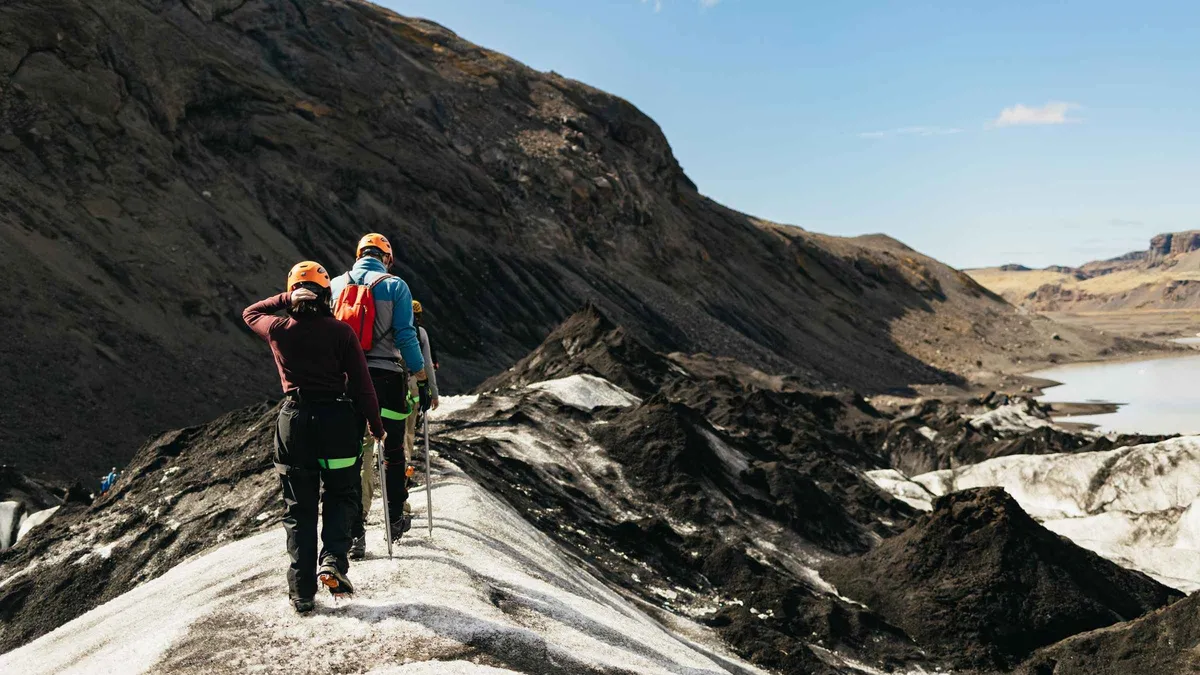
 Vik: Guided Sólheimajökull Glacier Hike
Tröll Expeditions' three-hour walk from the Sólheimajökull car park. The route heads for the ice tunnels, moulins and crevasse edges rather than distance, so it suits a half…
Check Availability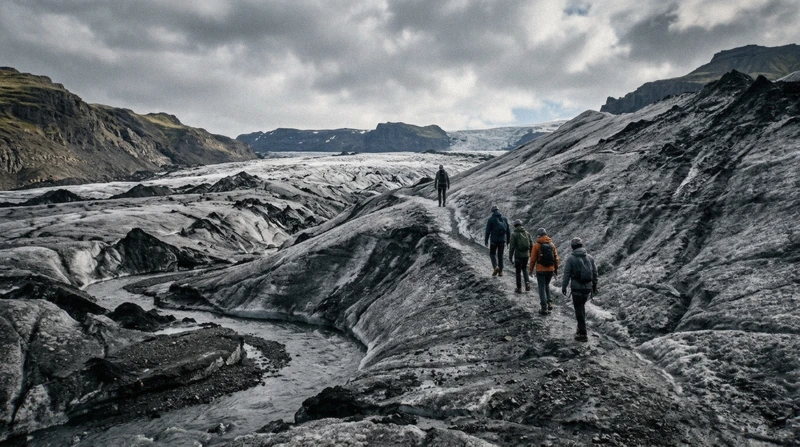 from $104Cheapest and best rated
 Sólheimajökull Glacier Hike: Adventure in a Small Group
Icelandic Mountain Guides cap the group at 14 and spend four hours getting deeper onto the ice, past crevasse edges and meltwater channels. Guides here also sit on…
Check Availability from $120Max 10 guests
 Sólheimajökull Glacier Adventure: Small Group Glacier Hike
David The Guide caps this four-hour walk at ten people, which is why it moves at the pace of the group rather than the timetable. Guides fill your…
Check AvailabilityWhen a Natural Cave Is Open, and Why It Closes
The reliable season is roughly November through March. Some operator listings advertise a wider September to April window, and that optimism is not baseless, cold snaps can open early access in a good year, but the entrances genuinely melt shut once the warmer months bring meltwater back, and operators themselves disagree on exactly where the shoulder months fall. Treat November through March as the dependable core and anything outside it as a bonus, not a plan.
| Period | Cave status | Why |
|---|---|---|
| November-March | Reliable window | Refrozen tunnels stable enough for guided entry |
| September-October | Sometimes open | Early cold snaps can stabilize a cave ahead of schedule |
| April | Closing fast | Rising meltwater starts undercutting entrances |
| May-August | Not accessible | Summer meltwater actively carves and destabilizes the ice |
A combined Sólheimajökull glacier hike with an ice cave, when one is open and safe, runs about 3.5 hours total. That is longer than the shortest standard walks, because a guide spends extra time both reaching the cave and reading it before anyone steps inside. Last verified: August 2026.
The cold-month window is also the one with four hours of daylight and the highest cancellation odds, both covered in what winter changes on this glacier.
Natural Winter Cave, Ash-Insulated Cave, or Man-Made Tunnel
Three genuinely different things get marketed as an Iceland ice cave, and mixing them up is where most disappointment starts. Knowing which one a listing is actually selling matters more than the price.
| Type | Where | Season | Guarantee |
|---|---|---|---|
| Natural winter cave | Sólheimajökull and similar glacier margins | Roughly November-March | Never guaranteed, conditions permitting |
| Ash-insulated cave | Katla ice cave, under Mýrdalsjökull near Vík | Marketed year-round | More reliable, insulated by volcanic ash |
| Man-made tunnel | Langjökull, West Iceland | Open all seasons | Fixed, engineered, essentially always open |
The Katla ice cave sits under the same Mýrdalsjökull ice cap as Sólheimajökull but is marketed year-round because a layer of volcanic ash insulates that particular ice from the summer melt that closes natural caves elsewhere. The Langjökull ice tunnel, further north in West Iceland, is not natural at all; it is a man-made tunnel cut into the glacier and engineered to stay open in every season. Both are real, bookable experiences in their own right and both are a genuinely different product from a natural Sólheimajökull cave.
We do not book or link out to either here; the point of naming them is so a reader chasing a guaranteed cave visit knows where that guarantee actually comes from, and that Sólheimajökull was never going to be the place to find it.
What You Will See on a Sólheimajökull Hike Instead
Ice tunnels and moulins
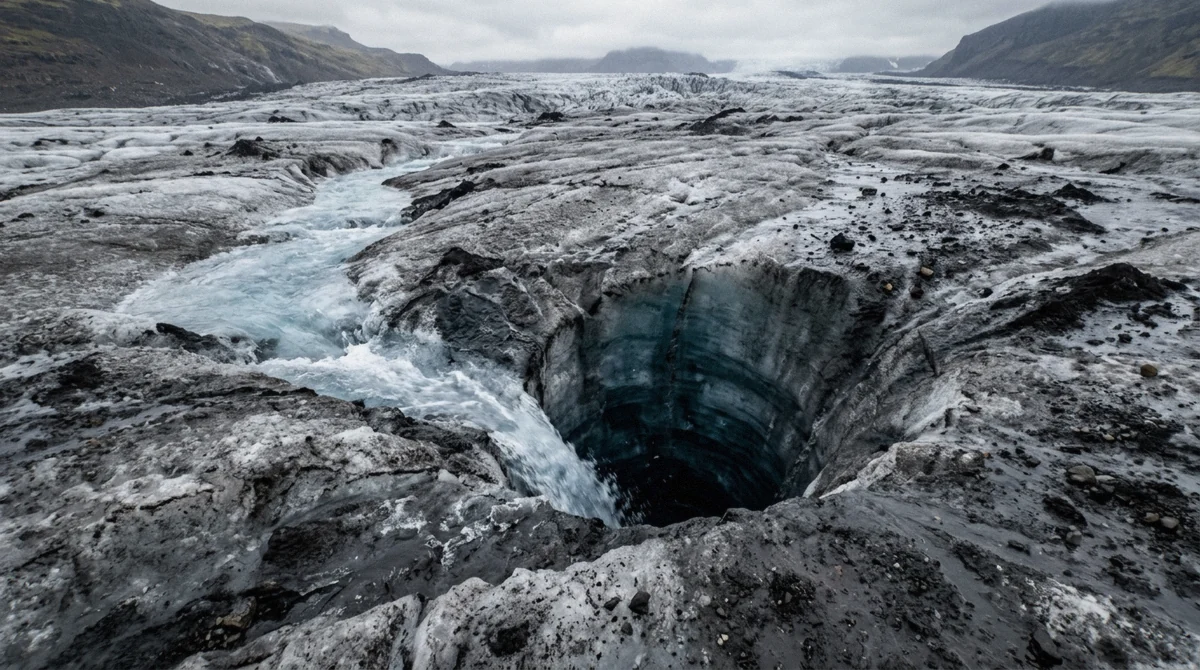
Tröll's three-hour walk is deliberately built around ice tunnels, moulins, the meltwater shafts that drill down through the glacier, and crevasse edges rather than covering distance for its own sake. These features are visible on nearly every departure, cave or no cave, and they are what most first-time visitors remember more vividly than a five-minute cave walk-through anyway. None of it needs experience: what a first hike on this ice actually involves walks through the gear, the pace and the age rules.
Crevasse fields and blue ice
The deeper, denser ice on Sólheimajökull reads distinctly blue where the surface has compressed over decades, especially along crevasse walls the guide points out and keeps the group a safe distance from. This is the ice most photographs of the glacier are actually showing, cave visits included.
The ash bands and the lagoon
From higher on the ice you can pick out the same ash layering visible from the free viewpoint below, dark Katla grit against the paler Eyjafjallajökull band, plus a longer view down toward the meltwater lagoon that began forming at the glacier's foot in 2011 and has grown since. A tour-3 guide often narrates the glacier's retreat here, using the Iceland Glaciological Society's own measured figures rather than guesswork. Full detail on those figures and the lagoon itself lives on the free viewpoint walk, the one page on this site that covers the geology in depth.
Planning a Winter Trip Around a Cave
If a cave is the real goal, a few practical steps improve your odds without ever making entry a promise.
- Travel November through March, the reliable window
- Book with an operator that runs cave-season departures, not just summer routes
- Ask directly whether a cave has been open on recent departures before you book
- Have a backup plan for the day; ice tunnels and moulins are shown regardless
- Pack for full winter cold, caves run colder than the open ice
Our Recommendation
Why Entry Is Never Guaranteed
Guides reassess a cave constantly, not once at the start of the season. Ice that refroze solid in December can thin from a warm spell in January; a ceiling that held steady for weeks can develop a stress crack a guide notices on approach and decides, on the spot, not to risk. That daily judgment call is the same principle SafeTravel states for the glacier as a whole: "trips to the glaciers are not without danger, Icelandic glaciers are constantly moving," and a cave, being carved ice under load from everything above it, is one of the more dynamic features on the whole margin.
This is also why no listing on this site, or honestly anywhere, should promise a cave outright. Every operator sells the visit as conditions permitting for the same reason we say it here plainly: the alternative is a guide walking a group toward a cave they have not personally checked that morning, which is not how any certified operator on Sólheimajökull actually works. For a guaranteed vertical ice experience instead, a first roped climb on this glacier is booked as its own product rather than left to conditions.
Cave-Set Traveller or Flexible Traveller
If A cave is the whole reason for your trip and you can travel in winter
book November through March; the ash-insulated Katla ice cave near Vík runs year-round as a backup if timing is tight, though it is a separate destination from the tours compared here.
If You want the best odds of a memorable hike regardless of season
book tour-3's ice-tunnel-focused walk and treat any cave as a bonus.
If You are visiting in summer
skip planning around a cave entirely; ice tunnels, moulins and crevasse edges are what every departure shows in the warmer months.
If You just want to see the glacier without booking a hike at all
the free viewpoint walk shows the tongue and ash bands from outside the ice, no cave included.
Frequently Asked Questions
Is there an ice cave at Sólheimajökull?
A natural one forms most winters, reliably accessible roughly November through March. Entry is never guaranteed on any tour; guides reassess the cave constantly and it can close between one week and the next.
When can you visit an ice cave in Iceland?
For a natural cave at Sólheimajökull, roughly November through March. The ash-insulated Katla ice cave nearby and the man-made Langjökull tunnel in West Iceland are both marketed year-round instead.
Why do ice caves close in summer?
Summer meltwater is what carves the tunnels in the first place, and that same meltwater destabilizes them once temperatures rise. Caves are only entered once the cold months refreeze the ice solid enough to walk through safely.
Are ice caves guaranteed on a glacier hike?
No. Every tour here sells a cave visit as conditions permitting, never as a fixed stop. The tours are glacier hikes first; a cave is a seasonal bonus a guide may be able to show you.
What is the difference between a natural ice cave and an ice tunnel?
A natural cave, like the one at Sólheimajökull, is carved by meltwater and only enterable once refrozen in winter. A man-made tunnel, like Langjökull's, is engineered into the glacier and stays open in every season.
Can you go inside the ice on a Sólheimajökull hike?
Yes, through ice tunnels and moulins that most hikes reach regardless of whether a full cave is open that week. Tour-3's route is built around these features specifically.
Which is better, a glacier hike or an ice cave?
They are not really competing options; a cave visit only ever happens as part of a guided glacier hike here, never as a separate booking. The hike itself, crevasse edges, moulins and blue ice, is the real product regardless of cave conditions.
A Sólheimajökull cave is real, seasonal and worth planning around if it is genuinely your goal, but no honest operator will promise it outright. What every hike here reliably delivers is guided time inside the ice itself, tunnels, moulins and crevasse walls included, which is more than enough reason to book even in a month when a cave is not on the table. For the full comparison of guided walks on the Sólheimajökull ice, see the tour list linked throughout this page.