 Sólheimajökull Glacier Hike
Sólheimajökull Glacier Hike in Winter: What Changes
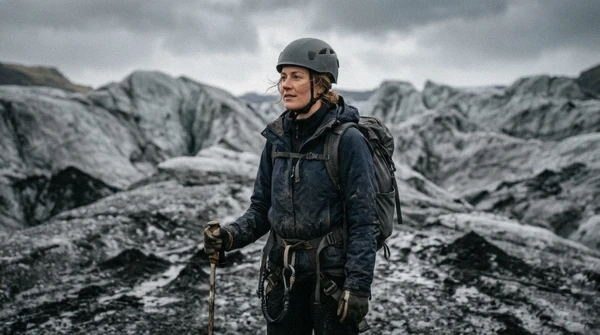
A solheimajokull glacier hike in winter is a genuinely different day out than the same hike in July, and most of the difference comes down to light, not danger. Every operator on this glacier runs year-round, but December gives you roughly 4 hours of usable daylight against July's 20, which reshapes departure times, driving plans, and what you can reasonably fit in before dark. Winter is also the only season a natural ice cave opens under the ice, which is the trade a short day buys you. This guide covers what actually changes: daylight month by month, temperature, road and wind checks, and what happens if a departure gets called off.
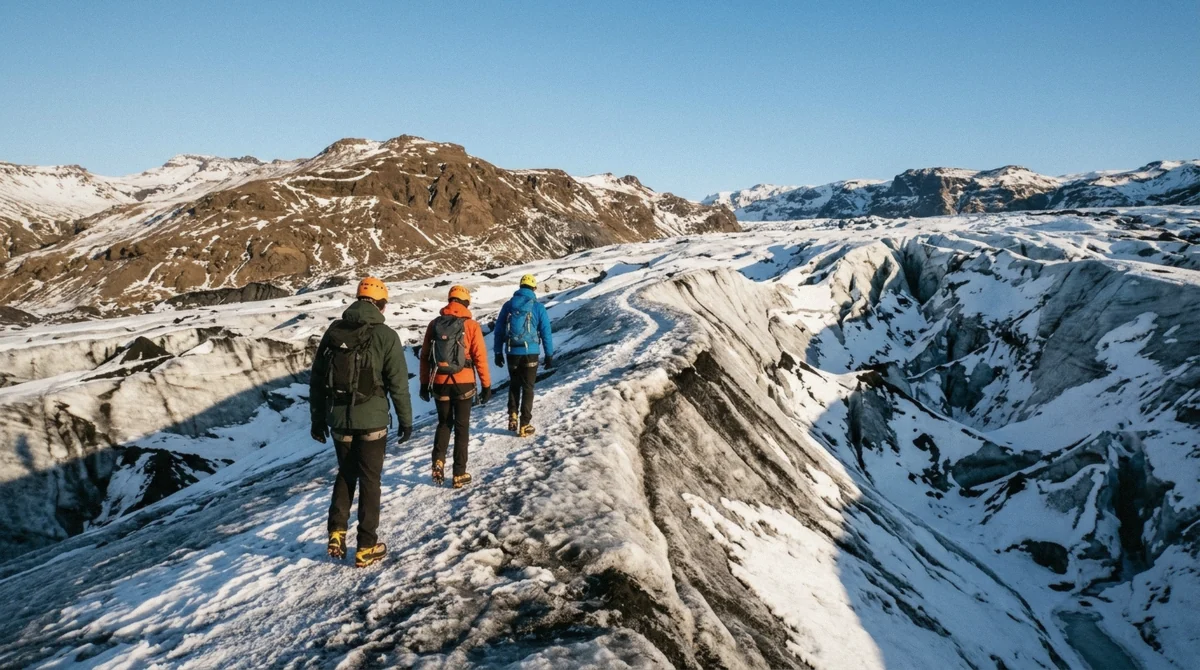
Quick answer
A Sólheimajökull glacier hike in winter runs on the same year-round schedule as summer, but with roughly 4 to 8 hours of daylight instead of 17 to 20, which forces a single early departure rather than a choice of slots. Wind, not cold, is what actually cancels a departure here, and a weather-cancelled tour is refunded in full.
Key takeaways
- December gives about 4 hours of daylight, January about 5; plan on one departure, not a flexible afternoon
- Winter is the only window for a natural ice cave, roughly November through March, alongside the standard hike
- The shortest, best-suited winter picks are the 3-hour hike and the $104 entry-level route
- Road 221 to the car park is gravel and can carry snow or ice in winter; check road.is before you drive
- Free cancellation applies up to 24 hours ahead on these listings, and a weather-cancelled departure is refunded in full
- For the full drive, parking and turn-by-turn detail in any season, see the driving and parking notes
What Winter Changes on This Glacier
Nothing about a Sólheimajökull glacier hike stops for winter. Every operator listed here departs every month of the year, weather allowing, and the ice itself does not become off-limits between November and March. What changes is the frame around the hike: less daylight to work with, colder wind at the margin, a car park approach that can carry snow or ice, and a genuine bonus most summer visitors never get, a natural ice cave carved by the previous summer's meltwater and stable enough by winter to walk into.
That also means winter is not a compromise season squeezed in around the real trip; it's a legitimate reason to go. Firmer ice, fewer open crevasses near the surface, and a cave that only exists in the cold months are trade-offs most visitors never weigh, because most glacier trips to Iceland default to summer without asking what the other half of the year offers.
The practical effect is a shorter, more front-loaded day. Where a July visitor can choose between an early hike and an afternoon slot, or add a full 11-hour day trip with waterfalls on either side, a December or January visitor is usually looking at a single early-morning or midday departure and a drive home before or not long after dark. None of that makes winter a lesser season here; it makes it a different one, with its own honest trade-offs covered section by section below. Nothing about the hike itself gets harder in the cold; what a first walk on this ice involves applies in January as much as in July.
Tours That Fit a Short Winter Day
Shorter routes and car-park meeting points suit winter's narrow daylight window better than the longest itineraries.
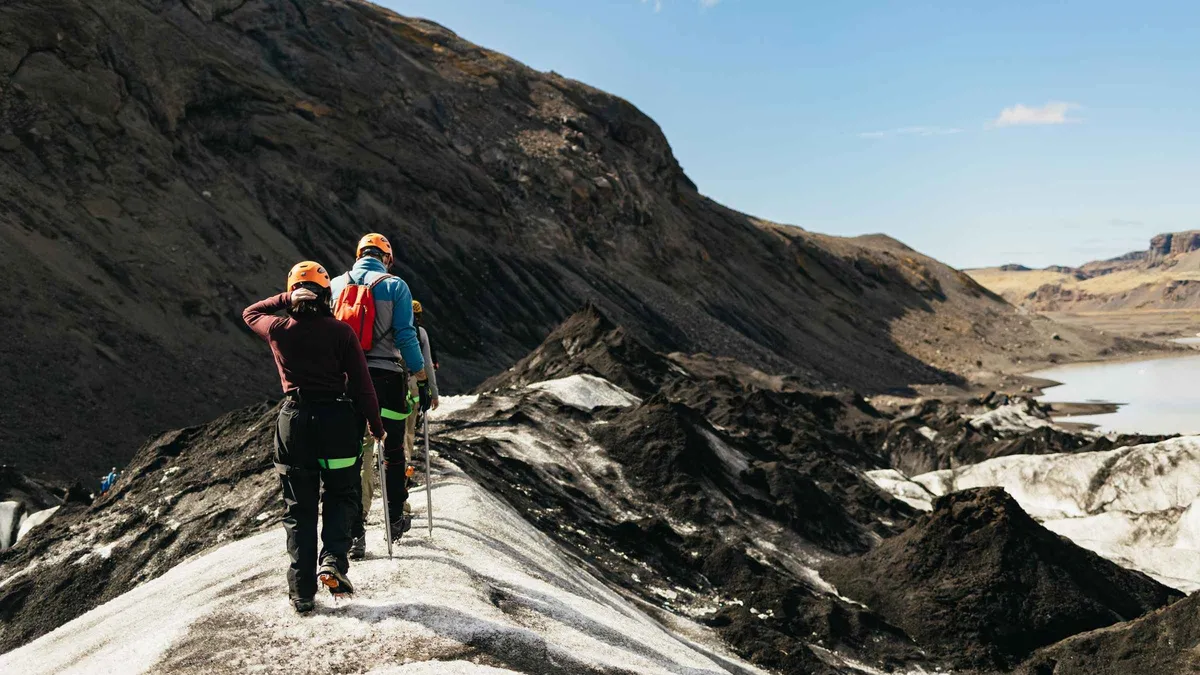 from $120Shortest, 3 hours
 Vik: Guided Sólheimajökull Glacier Hike
Tröll Expeditions' three-hour walk from the Sólheimajökull car park. The route heads for the ice tunnels, moulins and crevasse edges rather than distance, so it suits a half…
Check Availability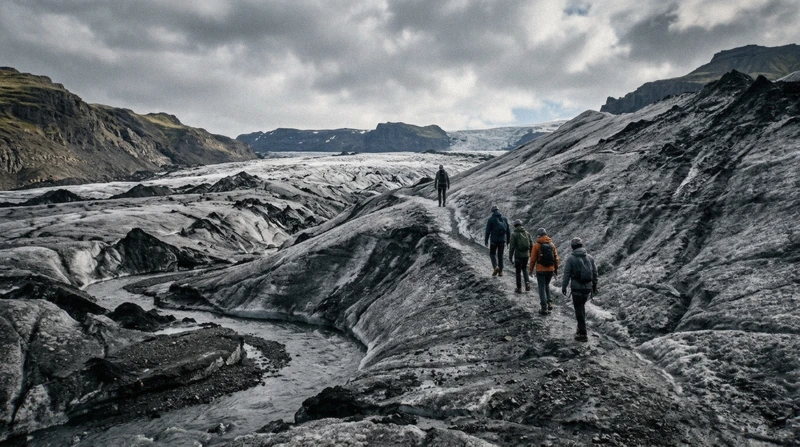 from $104Cheapest and best rated
 Sólheimajökull Glacier Hike: Adventure in a Small Group
Icelandic Mountain Guides cap the group at 14 and spend four hours getting deeper onto the ice, past crevasse edges and meltwater channels. Guides here also sit on…
Check Availability from $120Max 10 guests
 Sólheimajökull Glacier Adventure: Small Group Glacier Hike
David The Guide caps this four-hour walk at ten people, which is why it moves at the pace of the group rather than the timetable. Guides fill your…
Check AvailabilityDaylight Month by Month
Sólheimajökull sits at roughly 63.4°N, and daylight swings hard across the year at that latitude. These are astronomical figures for the site's latitude, not a weather forecast, and they set the real limit on how a winter day here is shaped.
| Month | Daylight | Typical temperature | What it means |
|---|---|---|---|
| January | about 5 hours | roughly 1 to 3°C, colder on the ice and in wind | One departure only; plan the whole day around it |
| February | about 8 hours | still near winter lows | A little more room than January, still a single-slot day |
| March | about 11 hours | milder than deep winter | Days lengthen quickly; last reliable month for ice caves |
| April | about 15 hours | warming toward spring | Full working daylight returns |
| May | about 18 hours | approaching summer levels | Long light, roads reliably clear |
| June | about 20 hours | roughly 11 to 13°C at the height of summer | Near-solstice; the sky never goes fully dark |
| July | about 20 hours | roughly 11 to 13°C | Peak light and the warmest weeks |
| August | about 17 hours | still near summer range | Light shortening but still generous |
| September | about 13 hours | cooling toward autumn | Daylight and darkness near even |
| October | about 9 hours | cooling toward winter | Shoulder into short days begins |
| November | about 6 hours | approaching winter lows | Ice cave season opens as the tunnels refreeze stable |
| December | about 4 hours | roughly 1 to 3°C, colder on the ice and in wind | Shortest daylight of the year; a single early slot is the norm |
Around the December solstice there are roughly 4 hours between sunrise and sunset at this latitude; around the June solstice roughly 20, and the sky never goes fully dark. The Icelandic Met Office does not publish 30-year climate normals for a station at Vík, so the temperatures above are typical daytime ranges in degrees Celsius rather than an official average: roughly 1 to 3°C in the depth of winter and 11 to 13°C at the height of summer, always colder on the ice than at the car park, and colder again in wind. Check the actual forecast close to your date at en.vedur.is rather than relying on a seasonal average.
November through March is also the window that opens the natural ice cave under the glacier margin, covered in full on the ice cave page.
Winter Versus Summer on Sólheimajökull
The two seasons ask different things of a visitor here, and neither is strictly the better choice; they trade daylight and driving ease for the ice cave and a quieter margin.
| Aspect | Winter (Nov to Feb) | Summer (Jun to Aug) |
|---|---|---|
| Daylight | About 4 to 8 hours | About 17 to 20 hours |
| Typical temperature | Roughly 1 to 3°C, colder in wind | Roughly 11 to 13°C |
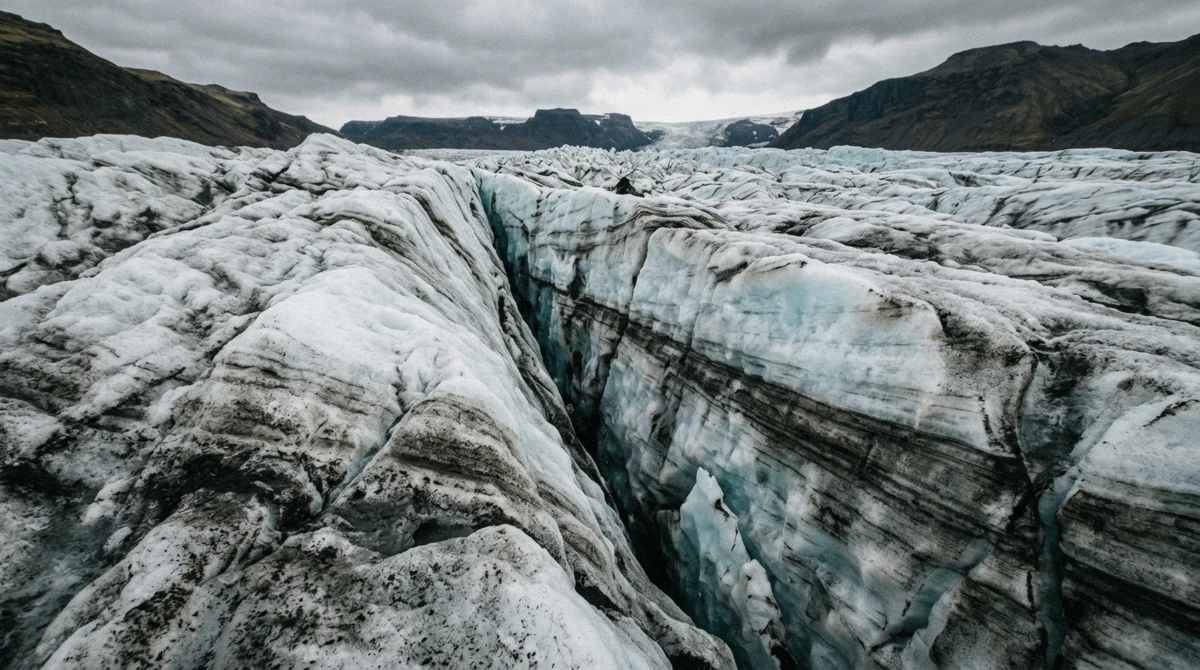
| Ice conditions | Firmer surface, less open meltwater | More surface meltwater, more open crevasses, a faster-changing margin |
| Departure options | Usually one early or midday slot | Full range, including the 11-hour day trip from Reykjavík |
| Roads | Route 1 and Road 221 can carry snow or ice | Reliably clear |
| Unique to the season | The only window for a natural ice cave | Longer combined itineraries with waterfalls and beach stops |
Neither season closes the glacier; the guided hikes here run year-round regardless of month. What genuinely shifts is how much day you have around the hike and what the ice looks like underfoot: firmer and quieter in winter, more actively melting and more crevassed by mid-summer.
Getting There in Winter: Roads, Wind and Checking Before You Drive
The drive itself does not change route in winter: Route 1 east from Reykjavík, then Road 221, about 5 km of gravel off the highway near Skógar, down to the car park. What changes is surface condition. Route 1 and Road 221 can both carry snow or ice in winter, and a road that is fine at 9am can look different by early afternoon once light fades and temperatures drop.
Parking at the car park is a flat 750 ISK (about $6 at 123 ISK to the dollar, 16 August 2026) for a private car, paid through the Parka app; that fee does not change with season. Last verified: August 2026.
- Road and closure status: road.is and umferdin.is, run by Vegagerðin, the Icelandic Road and Coastal Administration
- Forecasts, wind warnings and hazard bulletins: en.vedur.is, the Icelandic Met Office
- Check both the morning of your hike, not just the night before; winter conditions shift fast on the South Coast
- A rental car handles Road 221 at low speed in winter as in summer; no 4x4 is required, but winter tires matter
Wind, not cold, is the usual reason a South Coast departure goes sideways in winter. A clear, calm day at minus a few degrees is a perfectly workable hike; a warmer but gusty day is more likely to see a delayed start or a shortened route. For the full drive time, Road 221 turn detail and what the car park has, see the driving and parking notes for this glacier, which cover the route in every season, not just winter.
Our Recommendation
If you want the widest choice of departure times and the longest combined day trips, aim for June through August. If a natural ice cave is the actual draw, that trade only exists between November and March, and it's worth the shorter daylight window to see it.
If Your Hike Is Cancelled
Free cancellation up to 24 hours ahead applies across the listings on this page, and if an operator calls off a departure for weather, that departure is refunded in full; you are not left chasing a credit. In winter, a cancellation is more often about wind than snow on the road itself, since Route 1 and Road 221 are generally kept passable even when conditions on the ice are marginal.
If you're booked for a single day with no flexibility either side, build in one buffer: a second full day in the area, or at minimum a later flight, so a called-off morning slot has somewhere to move to. Operators contact you directly if a departure is affected, and the decision is usually made the morning of, once the day's wind forecast is clearer than it was the night before. On a cancelled morning the free trail from the car park is often still walkable, and what that walk shows you and where it stops is worth knowing before you drive out.
Which Month Suits You
If You want to see a natural ice cave
book November through March, the only window operators sell this on Sólheimajökull.
If You want the longest daylight and the full-day trip from Reykjavík
June through August gives up to about 20 hours of light and the reliable roads for the 11-hour day trip.
If You want a quieter margin and workable light without deep winter's short days
April to May or September to October gives 9 to 15 hours of daylight and milder driving than December to February.
If You're traveling in December or January and worried about the short days
plan a single early departure; with roughly 4 to 5 hours of daylight, that's the realistic option, not a limitation you're missing something by accepting.
If You want the least chance of a weather-related reshuffle
no month removes that risk entirely; check en.vedur.is close to your date regardless of season, since wind is the real trigger, not the calendar.
Frequently Asked Questions
Can you hike Sólheimajökull in winter?
Yes. Every operator on this glacier runs year-round, weather allowing, and winter is also the only season a natural ice cave is stable enough to visit alongside the standard hike.
What is the best month for a Sólheimajökull glacier hike?
It depends what you want. June through August gives the most daylight and the widest choice of departures, including the full-day trip from Reykjavík; November through March is the only window for a natural ice cave.
How cold is it on the glacier in winter?
Typical daytime temperatures run roughly 1 to 3°C in the depth of winter, colder on the ice itself than at the car park, and colder again in wind. Check the current forecast at en.vedur.is close to your date rather than relying on a seasonal average.
How much daylight is there in December at Sólheimajökull?
About 4 hours around the solstice, roughly 5 hours across January. That's the figure that drives most winter planning here, since it usually allows only a single departure.
Do glacier hikes get cancelled in winter?
Sometimes, and wind rather than cold is the usual reason. Free cancellation applies up to 24 hours ahead on these listings, and a weather-cancelled departure is refunded in full.
Is the road to Sólheimajökull open in winter?
Generally yes, but Route 1 and Road 221 can carry snow or ice, so check road.is and umferdin.is the morning of your visit, not just the night before.
Is winter or summer better for a glacier hike?
Neither is strictly better; they trade different things. Summer gives longer days and a wider choice of routes; winter gives the ice cave and firmer, quieter ice with less open meltwater.
Winter doesn't close this glacier, it reshapes the day: less light to plan around, colder wind at the margin, and one trade most visitors never get outside these months, a natural ice cave. Pick the season for what it actually offers rather than assuming shorter days mean a lesser hike; browse the guided hikes on this glacier and check en.vedur.is close to your date whatever month you land on.